
Window Systems · Thermal Break
Thermal Break Aluminum Window Systems
Thermal-break aluminum windows from Foshan, including partner-certified systems for US, Canadian and Australian projects. Compare frame, glazing and evidence routes.
Send your window schedule for a configuration review All Window Systems
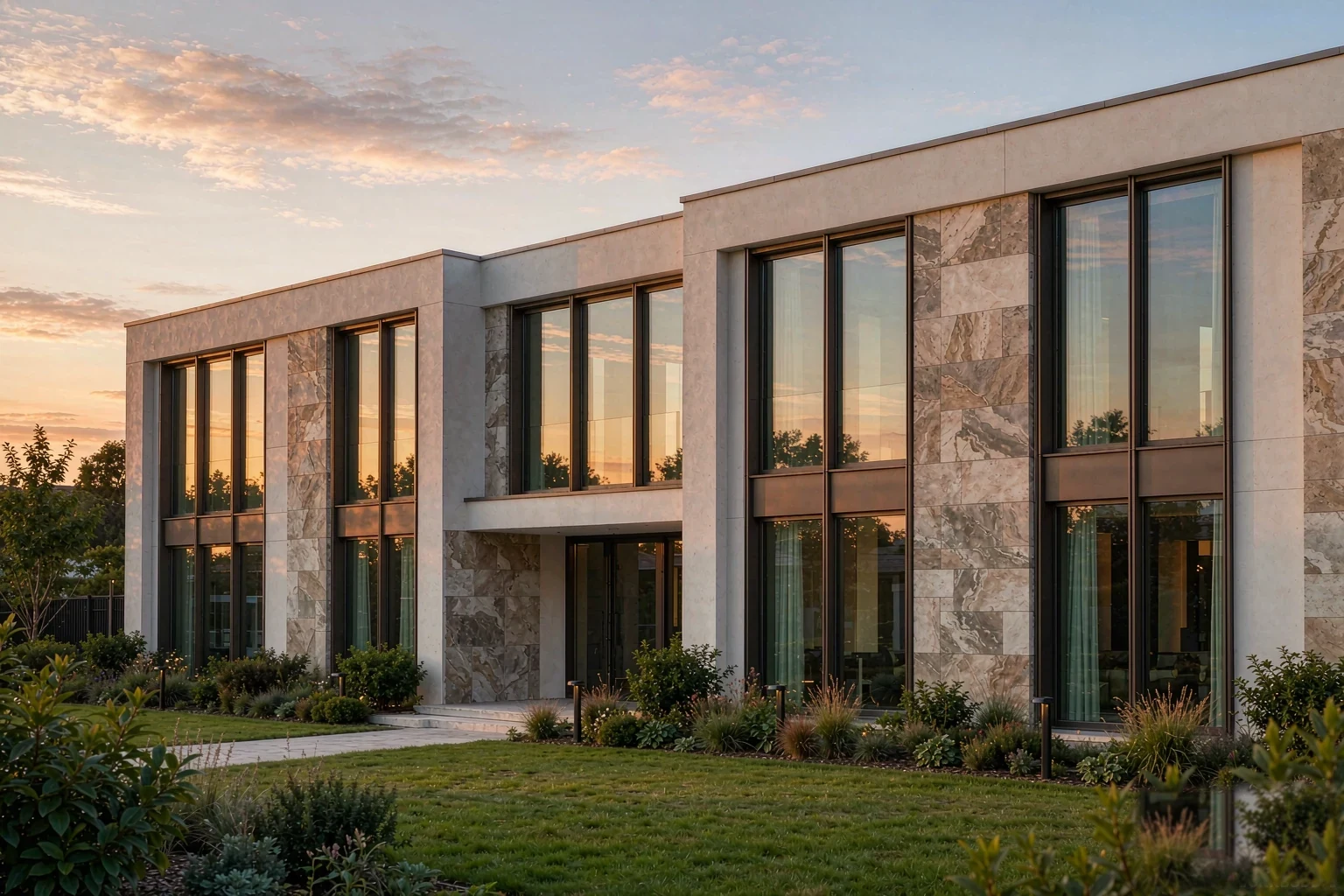
Thermal-break aluminum windows separate inner and outer profiles with an insulating barrier, cutting thermal bridging and condensation. Starveil supplies project-specific window packages from Foshan — including certified partner-manufactured systems for the US, Canada and Australia — with frame, glazing, QC and delivery coordinated per project.
Window systems are quoted against your project’s drawings and destination standards — profile family, glazing and performance values are set at specification stage, so every figure in your quote traces to a configuration rather than a brochure.
01
Why the Break Matters More Than the Brand
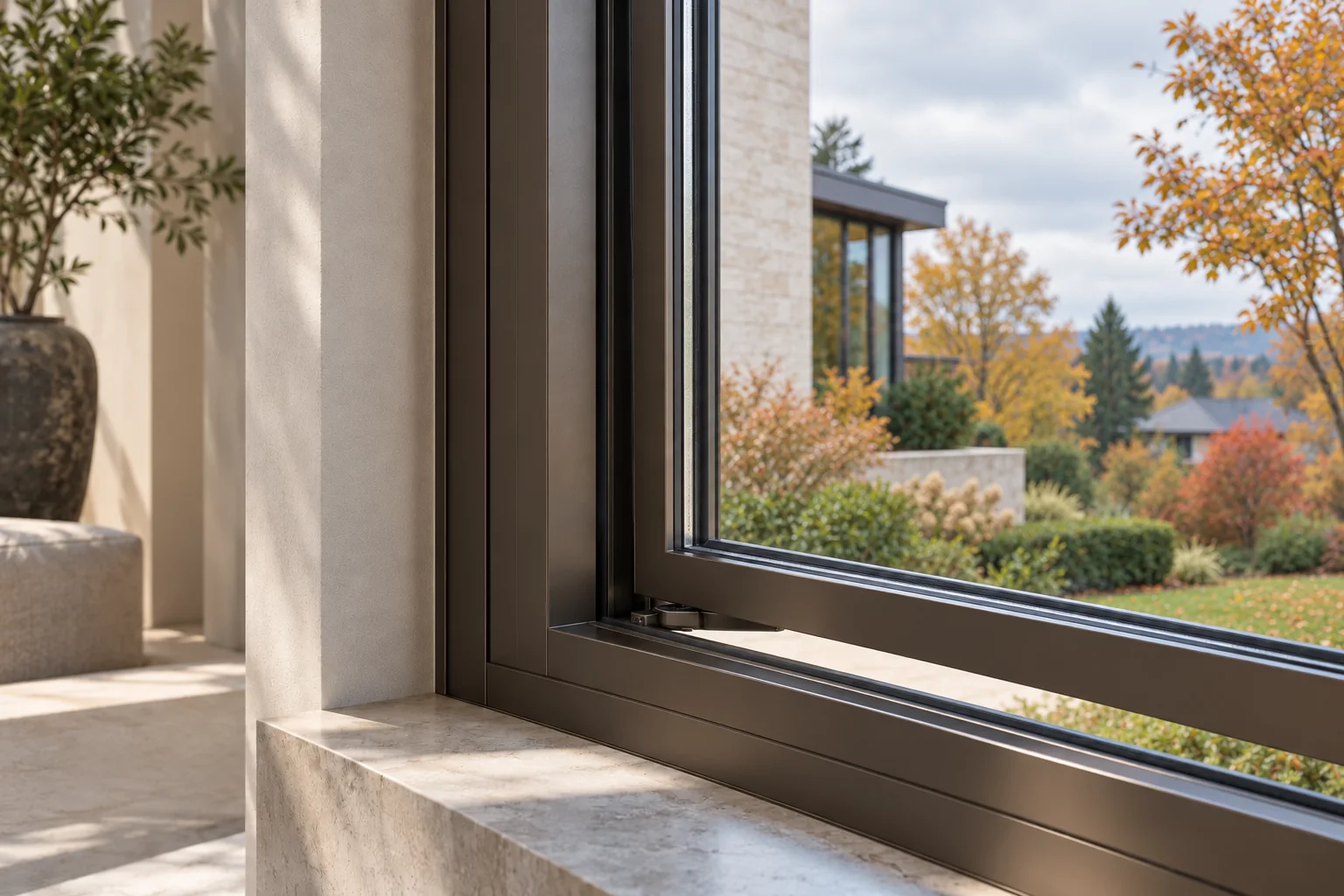
An aluminum frame is an excellent conductor. Without an intervening barrier, the frame you touch on a winter morning is a thermal bridge — energy leaving the building through its own structure, and condensation forming exactly where you least want it. A thermal break is a low-conductivity barrier, typically polyamide, set between the exterior and interior aluminum profiles so the two never touch.
The result is a window family suited to heated and cooled buildings across climates: villas in seasonal regions, apartment projects with energy targets, hotels and commercial spaces where interior comfort and condensation control carry real weight. The barrier is invisible in the finished window, which is precisely why it belongs in the specification rather than in a photograph — a thermal break cannot be seen, only specified, tested and evidenced.
02
Where Thermal Break Windows Earn Their Place
- Villas and residences in seasonal climates, where heating and cooling costs are a lived experience.
- Multi-unit apartment projects with envelope energy targets set by the developer or the market.
- Hotels and hospitality interiors, where guest-room comfort and condensation-free glazing zones are operational requirements.
- Offices and commercial fit-outs with interior climate control running year-round.
In consistently hot, humidity-managed markets the calculation shifts toward glazing selection and solar control — which is a glazing decision before it is a frame decision. That distinction is one we make with you per project, not in advance on a product page.
03
Profile Families and What Each One Implies
Thermal break systems come in profile families, and the family constrains everything downstream — sash weights, glazing range, hardware class and achievable openings.
| Family | Typical character | Watch for |
|---|---|---|
| Slim residential frames | Maximized glass, fixed lights and modest sashes | Limited to smaller openings and lighter glazing |
| Standard casement families | Balanced strength and sightlines, wide hardware range | Heavier sashes demand matching hardware |
| Heavy structural frames | Large formats, high sash weights, triple glazing capability | Wider profiles change sightlines and detailing |
Selecting the family is the first real decision of a window specification, and it deserves a conversation with drawings open — not a catalogue page comparison.
04
Glazing and the Frame Work as One System
A thermal break frame paired with single glazing is a half-measure; a high-specification insulated unit in a non-broken frame is the same mistake in reverse. Frame, glazing, spacer and seal form one thermal system, and each element caps the performance of the others.
Glazing makeup, coating selection and spacer type are decided against your climate zone, orientation and interior requirements. These values are confirmed per project during specification, because the honest answer to “what performance will I get” is “what is the building asking the window to do” — and that question has a different answer in Melbourne, Dubai and Toronto.
05
Design Options That Stay Inside the System
Finishes
Powder coating across a full color range, anodized finishes where the project calls for them — specified by reference sample or code, never by adjective.
Openings
Fixed, casement, awning and tilt-turn configurations within each profile family’s capability.
Hardware
Mechanism classes matched to sash weight and usage intensity, from residential duty to high-cycle commercial operation.
Integration
Reveal details, drainage design and interface conditions coordinated with your wall construction — the interface is engineered, not improvised on site.
06
What We Confirm Per Project — and Why
Performance figures belong to configurations, not to product names. A U-value belongs to a specific frame family, glazing makeup and spacer combination tested as a unit; quoting one number for a whole product line would be a guess dressed as a specification.
At specification stage we confirm the performance of the selected configuration against the destination project’s requirements. The partner-certified supply route for the United States, Canada and Australia is available now; the quote and submittal identify the certificate holder, covered model and matching document. Thermal, air, water and acoustic values are stated only for a documented configuration.
07
How the Evidence Boundary Works
Starveil coordinates both in-house window work and partner-manufactured certified systems in Foshan. Our manufacturing partners hold aluminum-window certificates for the United States, Canada and Australia; Starveil provides the system selection, technical coordination, QC and delivery interface. The submittal identifies the relevant partner, certificate and covered configuration. In-house production and QC records are not presented as the partner’s product certificate.
Our United States private-residence case documents coordinated interior materials; it is not presented as proof that Starveil manufactured or certified its windows. Window-specific project references are added only when their scope and supporting records are confirmed. For current certified supply, request the partner-held certificate matched to your proposed window schedule.
08
From Drawing Review to Container
Specification review
your drawings, schedules and destination standards against profile family options.
Configuration confirmation
glazing, hardware and finishes locked as a bill of materials.
Production
fabrication with in-process QC at defined hold points.
Verification
project-specific testing references assembled for your file.
Packing and loading
export packing designed for the route, not for a catalogue photo.
FAQ
Frequently Asked Questions
Can you quote a U-value for your thermal break windows?
Not as a catalogue number. Thermal performance belongs to a frame family, glazing makeup and spacer combination tested as a unit — confirmed per project during specification, with test references supplied.
Do you offer both thermal break and non-break frames?
Yes. Non-broken frames suit certain warm-climate and budget applications; the choice is made per project against climate, energy targets and market requirements.
Are thermal break windows necessary in tropical markets?
Often the priority shifts to solar control and glazing selection. The frame decision follows a climate analysis, not a default.
Can you supply certified aluminum windows for the US, Canada and Australia?
Yes. Through manufacturing partners, Starveil offers certified aluminum window systems for projects in all three markets. Share the project location and window schedule so we can match the proposal to the applicable partner-held certificate and covered configuration.
Can thermal break windows be combined with hurricane impact requirements?
That combination is scope-dependent — see our hurricane impact window systems page for the impact-rated discussion, and bring both requirements to the specification review.
Do you supply windows as standalone orders?
Window systems are scoped inside coordinated project packages. For supply-and-installation-only orders, our sister division at Starveil Build handles them.
Planning a Window Package?
Send your drawings or window schedule, destination and required performance criteria. We will propose the appropriate profile family and identify the relevant partner-certified route, covered model and certificate for your submittal.