
Technical Guide · 02
Aluminum Window & Door Systems: What to Check Before You Approve One
Two aluminum windows that look identical in a photo can differ in performance, longevity, lead time and maintenance by a wide margin. This guide walks through the parts of aluminum systems that actually differentiate one from another, and what to verify before approving a specification.
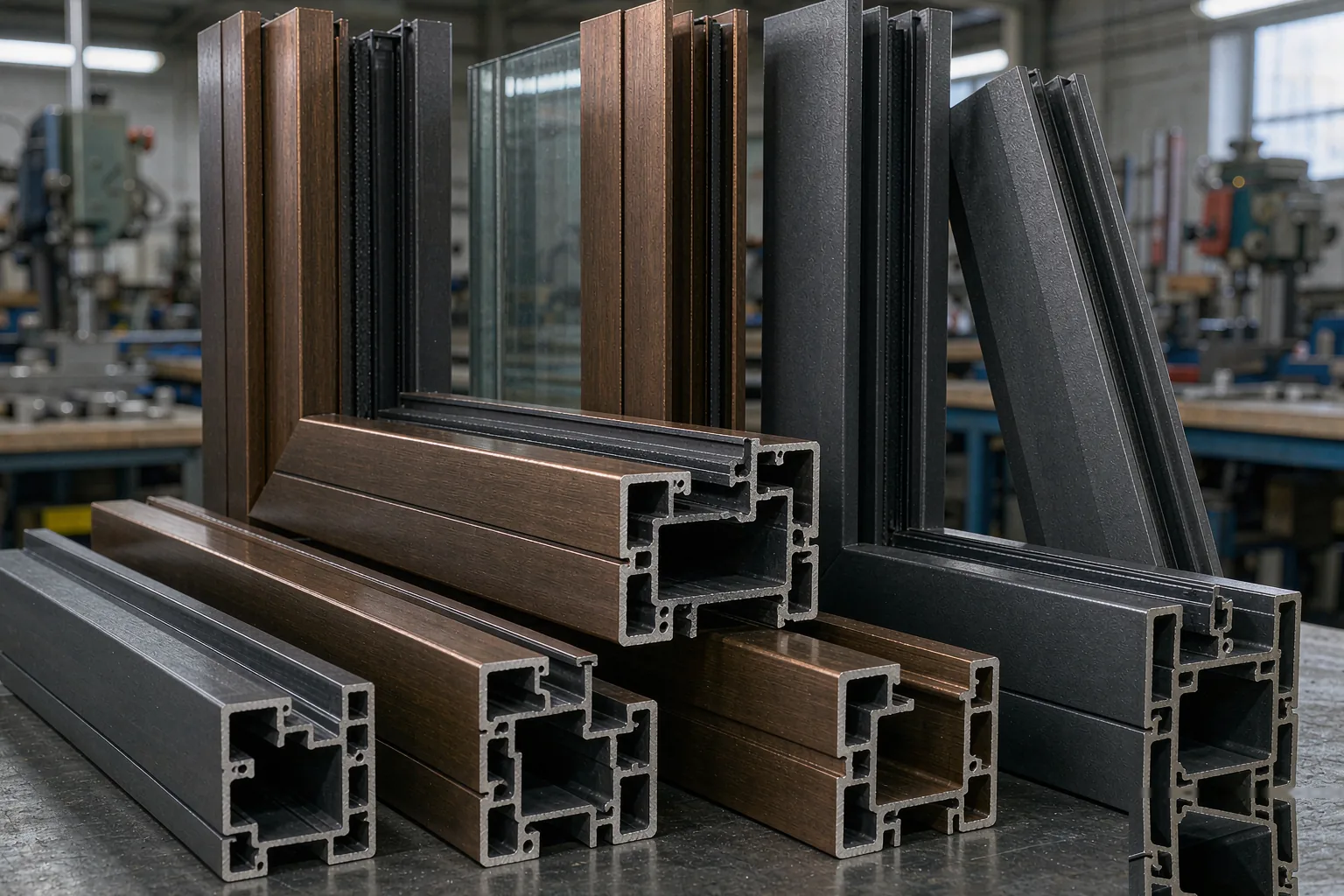
An aluminum system is defined by four decisions: profile family, thermal break, finish and hardware. Each one carries performance, lead-time and maintenance consequences. Before approving, confirm the test evidence matches your configuration, approve the finish on a physical sample, and specify hardware by grade.
On this page: Profile Families · Thermal Breaks · Finish Families · Hardware · Lead Time · Approval Checklist · FAQ
Part 01
Profile Families and What They Imply
The opening type is more than a style choice: it sets the limits of the system.
Casement & awning
Seal on compression when closed. Generally the strongest combination of weather performance and clean sightlines for typical residential openings.
Sliding & lift-and-slide
Run on tracks instead of compression. Large panes and wide openings favor them; weather performance and operation feel depend heavily on the specific system’s engineering, and the category spans a wide quality range.
Tilt-turn
Dual-mode European hardware. Ventilation with security, and good for inward-maintenance scenarios. The hardware is more complex, so the hardware grade matters more here.
Fixed & picture
The structural workhorse of large glass walls. Maximizes glass area; performance is decided almost entirely by the glass build and the frame’s thermal break.
Part 02
Thermal Breaks
The single biggest performance and cost divider inside aluminum systems.
What the break does
Aluminum conducts heat readily. A thermal break separates the outer and inner shells of the profile with a lower-conductivity barrier — in practice, a polyamide insulator — cutting heat flow through the frame itself.
Why it changes the number
The same glass unit performs differently in a broken vs unbroken frame. The frame either supports the glazing strategy or quietly undermines it; whole-window ratings show which.
Condensation behavior
In air-conditioned interiors in humid climates, unbroken frames can become condensation lines. The break is as much a moisture detail as an energy one.
Regional expectations differ
Some markets effectively require thermally broken systems for the energy code to be met; others do not. Which applies is a per-project, per-jurisdiction confirmation.
Part 03
Finish Families
The finish is the surface that faces weather and cleaning chemicals for decades.
Anodizing
An electrochemical layer integral to the metal — hard, metallic in character, and limited to the alloy family’s natural color range. Excellent abrasion resistance; batch-to-batch color matching is a known constraint to plan for across large orders.
Powder coating
A fused polymer layer sprayed and cured. Near-unlimited color range, consistent across large batches, and the default for project-scale color schemes. Durability depends on the coating chemistry and pretreatment grade.
Marine and coastal exposure
Coastal, poolside and high-pollution environments require specific pretreatment and coating systems. A standard finish that performs inland may chalk or pit within years at the coast, so the environment belongs in the specification rather than in the supplier’s assumptions.
Touch-up and repair
Powder can be field-repaired; anodizing cannot be re-applied on site. Where future damage is likely (high-traffic entries), factor repairability into the finish decision.
Part 04
Hardware
Hardware is where a specification quietly succeeds or fails.
Locking gear
Multi-point locking pulls sashes onto their seals evenly. On large sashes and exposure elevations, single-point hardware is a longevity and performance compromise.
Rollers for sliders
In sliding and lift-and-slide systems, roller grade defines how the door feels under hand for decades — and whether a heavy, full-height sash can still be opened one-handed in year ten.
Hinges and stays
Capacity ratings must match the actual sash weight and glass thickness rather than the catalog midpoint. Overloaded hinges sag; sagging sashes leak.
Finish matching
Hardware finishes (anodized tones, coated colors) should be chosen against the physical frame sample rather than a digital rendering.
Part 05
What Drives Lead Time
Knowing which decisions create schedule risk lets you sequence them early.
Profile and system selection
Custom dies and non-standard profile runs add weeks. Choosing an established system removes tooling risk.
Finish decisions
Color approval on physical samples rather than renders is a sequencing milestone — finish batches run after approval.
Glass builds
Coated, laminated and asymmetric IGU builds are made to order. Glass, more often than aluminum, is the critical path.
Hardware sourcing
Imported or specific-brand hardware adds procurement time — lock the hardware grade early in the specification.
Part 06
The Approval Checklist
What “approved” should mean before production is released.
Test evidence matched to configuration
Reports covering the frame family, glass build and opening type you are actually buying.
Physical finish sample approved
Signed, retained, and referenced in the finish schedule.
Hardware specified by grade and finish
Not just “European hardware” — the operating grade and color.
Per-project confirmation
At Starveil, system performance is confirmed against project drawings during specification. Values that cannot be evidenced are not quoted, and a supplier’s willingness to work this way is itself a quality signal.
FAQ
Frequently Asked Questions
Short answers to the questions buyers ask most about this topic.
Is a thermal break always necessary?
It depends on your code, climate and interior conditions. Beyond energy requirements, air-conditioned interiors in humid climates benefit from the condensation control a break provides. Whether it is required is a per-jurisdiction confirmation.
Can anodized finishes be repaired on site?
No. Anodizing is integral to the metal and cannot be re-applied. Powder coating can be field-repaired, which is why high-traffic entries often favor powder with repairability factored in.
Why does lead time depend on the glass more than the aluminum?
Coated, laminated and asymmetric insulated builds are made to order against your specification. Glass is frequently the critical path; locking the glass build early protects the schedule.
Keep Reading
Related Pages
Exterior Door Systems
Entry, patio, sliding, lift-slide, bifold and pivot systems compared side by side.
Façade & Curtain Wall Systems
Stick, unitized, window wall and structural glass systems for building envelopes.
About the Author
Starveil Solutions Engineering & Technical Team
This guide is written by the technical team responsible for specifying, coordinating and quality-controlling coordinated building-material packages on projects across the United States, Australia, the Middle East, Europe and Southeast Asia. More about our engineering support ›
Published 16 September 2026 · Part of the Technical Guides series
Approve Systems With Evidence, Not Photographs
Our technical team specifies aluminum systems per project — matching profiles, breaks, finishes and hardware to your exposure, code requirements and delivery sequence.