Project Planning Guide
Sample Approvals and Mockups: What “Confirmed” Means
The three levels of material confirmation — color boards, sealed samples and mockup rooms — what each one commits, what it costs, and how the evidence chain protects your project.
Published
Request a sample programme for your project scope All Project Planning Guides
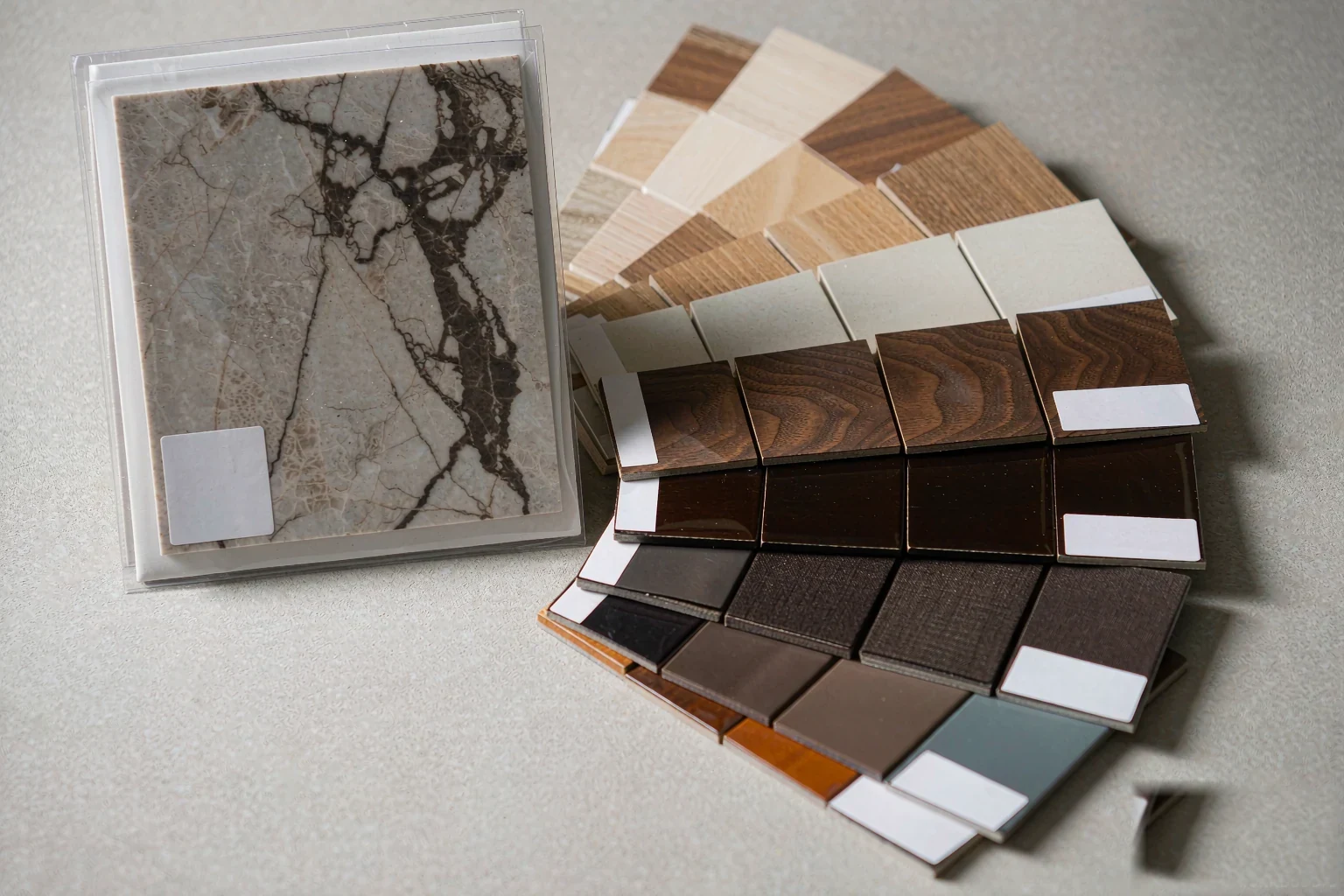
Sample approval creates an evidence trail between what was chosen and what is supplied: color boards establish finish direction, sealed samples provide an agreed comparison reference, and mockup rooms test assembly-level decisions. Record the approved revision, tolerances and sign-off responsibility so the reference can guide production and inspection.
Confirmation levels scale with the cost of being wrong: color boards set direction, sealed samples bind the standard, mockups prove the assembly. Match the level to the decision — skipping one is how disputes find their venue.
01
The Question Every Buyer Eventually Asks
It arrives mid-project, usually quietly: “how do we know what ships will be what we chose?” The answer is not trust and not contract language — it is an evidence chain, built in stages while decisions are still cheap to change. Sample approval is that chain, and this page is about building it deliberately instead of discovering its absence at unloading.
The chain has three links. Each one answers a different question, at a different price, at a different point in the programme — and confusing them is how projects end up with the wrong kind of confirmation for the question they actually needed answered.
02
The Three Levels, Side by Side
| Color board / reference | Sealed sample | Mockup room | |
|---|---|---|---|
| Confirms | Direction: tone, character, family | Binding reference: the exact finish and material | Assembly: how components combine in reality |
| Question answered | “Is this the world we are in?” | “Is this precise item the standard?” | “Do these decisions survive assembly?” |
| Cost of change if wrong | Trivial | Moderate — reorder, possibly schedule | Program-level — but found before the building pays |
| When it happens | Selection stage | Before production | Before full production of repeats |
Read the third row as a design instruction: the levels exist so that each class of mistake is caught at the cheapest possible moment. A tone error belongs at the color board; a finish mismatch at the sealed sample; an assembly clash at the mockup — and none of the three at container unloading, which is where they all land when the chain is skipped.
03
Level One: Color Boards and References
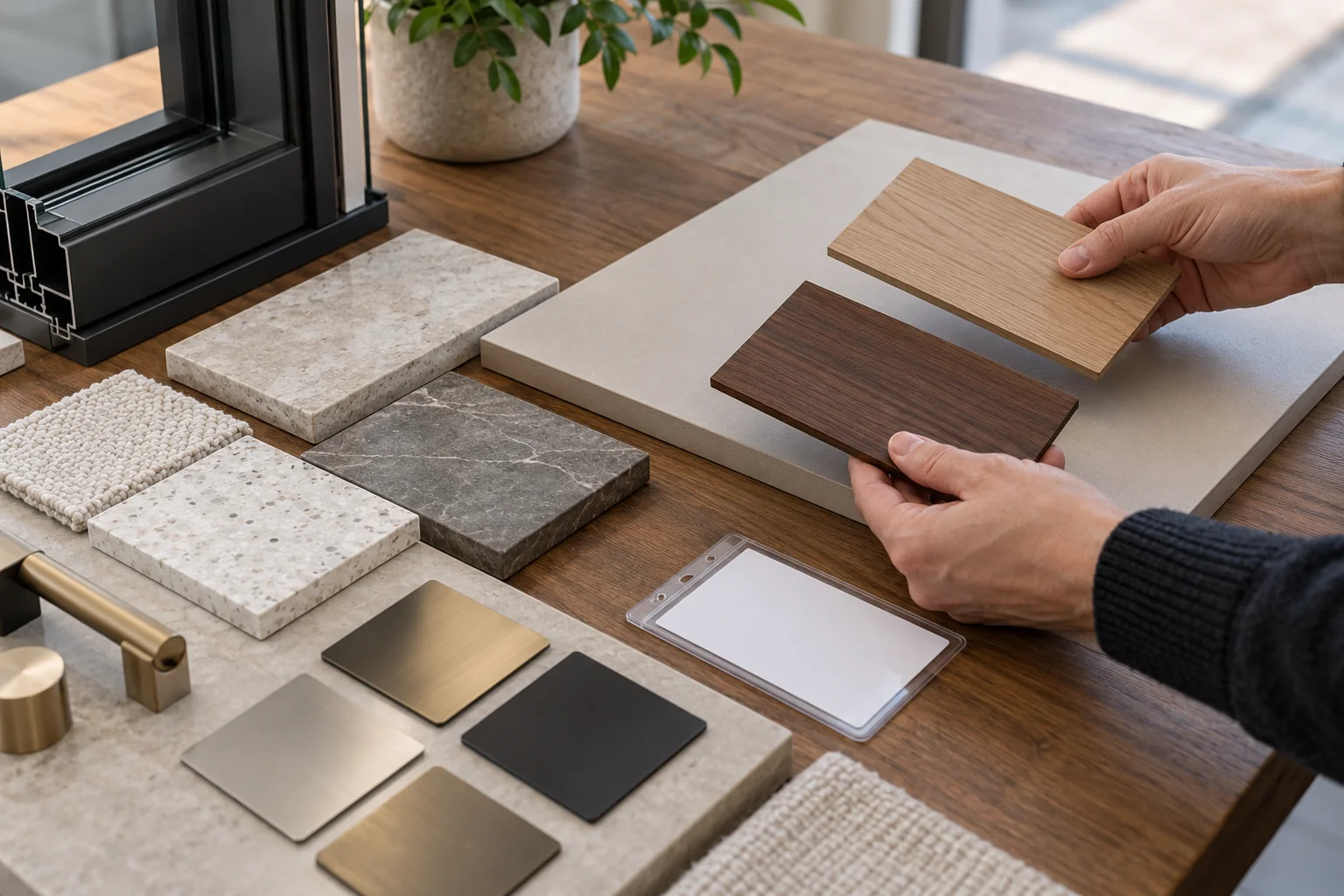
The color board stage is about direction, not commitment. References — physical boards, slab offcuts, fabric cuts, finish chips — align everyone on tone and character while every option is still open. Its discipline is honesty about what it is not: a color board does not lock a finish, and a supplier who treats a board as a production standard is skipping a level on your behalf.
Practical rules: work under consistent light, keep the board with the project file, and record what each reference is. Six months later, “the wooden one from the meeting” is not a specification.
04
Level Two: The Sealed Sample — Your Binding Standard
The sealed sample is the contract of the material world: a physical specimen, identified, dated, and retained as the standard the production batch must match. Everything that ships is QC’d against it — this is the mechanism by which “confirmed” acquires meaning at the factory and keeps it at the port.
What a proper sealed-sample protocol includes:
- Identification — what it is, from which source, approved by whom, on what date.
- Retention on both sides — one specimen with you, one with the manufacturer; matched standards, not a mutual memory.
- Batch QC linkage — the sample is referenced in the QC protocol, so inspection answers to it rather than to a general expectation of quality.
- Documentation — the sample’s existence and reference live in the project file, so a year-five replacement conversation begins with a standard, not an archaeology project.
The sealed sample is also where sourcing transparency becomes tangible: for partner-supplied categories, the sample is drawn from the actual production source, so approving it approves a real, identifiable supply chain — the disclosure discipline our surface and fixture scopes run on.
05
Level Three: The Mockup Room — Assembly Truth
A mockup room builds one representative unit — a bathroom, a kitchen, a wardrobe run, a hotel room — before the repeats go into production. It answers the question neither document can: do these components, from these factories, in this configuration, actually work together as a room?
The mockup is where interfaces surface: the drawer that meets the door swing, the basin that meets the countertop cutout, the lighting that flatters the finish it was chosen for. For multi-unit projects the economics are blunt — one mockup unit’s cost against the unit-rate error multiplied across two hundred repetitions. Hotel and apartment programs that skip the mockup do not avoid the discovery; they schedule it for installation, across every unit at once.
Approved mockups then become the most powerful standard in the chain: photographed, documented and referenced alongside the sealed samples, so “match the mockup” is an instruction a factory can execute.
06
Where Confirmation Chains Break
The photo standard
Approving finishes from photographs — a screen is not a sample, and calibration is not a material property.
The unretained sample
A sample approved and lost is a standard that no longer exists; retention is half the protocol.
The skipped level
Going from color board to full production — the sealed sample exists precisely to catch what direction cannot.
The unmocked repeat
Multi-unit production launched without a first-article room — assembly errors at unit rate, project-wide.
The sample from the wrong source
A showroom specimen that does not represent the production batch’s actual factory; samples must trace to the real supply chain.
Resources
Keep Reading
FAQ
Frequently Asked Questions
Do small projects need all three levels?
A single villa may run references and sealed samples without a formal mockup; the chain scales with the cost of being wrong. Multi-unit projects need all three — the mockup is what unit-rate economics demand.
Who keeps the sealed sample?
Both sides — one specimen with you, one with the manufacturer, identified identically. A standard held by one party only is half a standard.
Can a mockup be the actual first unit?
Yes — “first-article approval” uses the first production unit as the mockup, with the rest of the batch held until it passes. It trades schedule risk for mockup cost.
How do samples work for partner-supplied categories?
Samples are drawn from the actual production source, so approving the sample approves the real supply chain — which is the point of source disclosure.
What if the batch doesn’t match the sealed sample?
Record the deviation, compare it against agreed tolerances and hold the affected batch for disposition under the project QC procedure. Rework, replacement or a documented concession requires the authorized review before release.
Confirming a Package With Starveil?
Our sample programs follow this chain: references for direction, sealed samples matched on both sides and linked to batch QC, and mockup rooms for multi-unit scopes before the repeats commit. Send your package outline and we will propose the confirmation levels your project actually needs — which is occasionally fewer than you feared, and always the ones the repeats depend on.