
Markets · Africa
Building Material Packages for African Projects
Starveil supplies Africa building materials as coordinated building-envelope and interior-fit-out packages for African villas, apartments, hotels, offices and light-commercial projects. Opportunities in South Africa, Kenya, Nigeria, Ghana, Tanzania, Mauritius and other destinations are reviewed by country and city—not as one approval market. Product selection begins with the local authority route, building use, tropical, coastal, highland or arid exposure, maintenance capacity, import requirements and the final port-to-site journey.
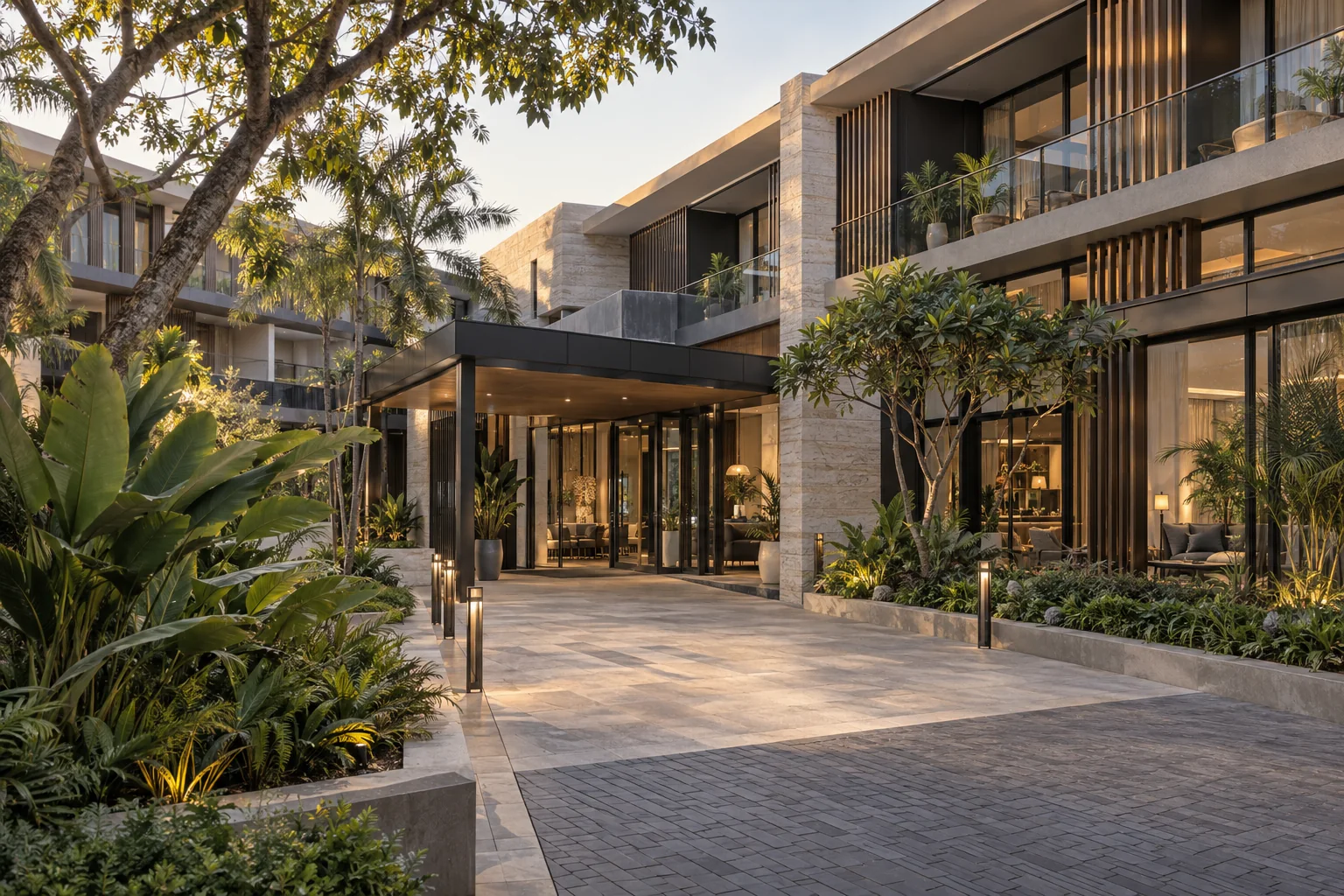
Starveil supplies coordinated building-envelope and interior-fit-out packages for African villas, apartments, hotels, offices and light-commercial projects. Opportunities in South Africa, Kenya, Nigeria, Ghana, Tanzania, Mauritius and other destinations are reviewed by country and city—not as one approval market. Product selection begins with the local authority route, building use, tropical, coastal, highland or arid exposure, maintenance capacity, import requirements and the final port-to-site journey.
Country first
Local code, authority and import route identified
Climate led
Heat, UV, rain, dust, humidity and corrosion inputs
Operation aware
Maintenance, spares and power or water context
Delivery planned
Port, inland route, packing and site handoff
On this pagePrioritiesWorkflowBest-fit routesDeliverablesEvidenceFAQ
Decision Priorities
What Must Be Clear Before a Reliable Proposal
Early clarity reduces hidden assumptions, unpriced interfaces and late approval changes.
Country, city & authority
Destination, municipality, building use, consultant specification, approval route and responsible local professionals.
Climate & exposure
Tropical rain, coastal salt, solar heat, UV, dust, wind, highland temperature range and drainage conditions as applicable.
Products & operating context
Exact systems, finishes and evidence matched to expected use, cleaning, maintenance, replacement access, power quality and water conditions.
Import & last-mile delivery
Importer, HS classification, conformity route, port, container plan, inland transport, site access, storage and unloading responsibility.
Working Model
From Project Brief to Controlled Delivery
One documented sequence connects design intent, commercial scope, technical approval, production and handoff.
- 01
Confirm the country route
The appointed local team identifies the code, authority, product regulation, importer and approval requirements.
- 02
Select resilient systems
Envelope and interior products are shortlisted against exposure, use, maintenance and available local support.
- 03
Map evidence and interfaces
Exact configurations, reports, drawings, samples, labels and open conformity actions are recorded.
- 04
Approve, manufacture and inspect
Released drawings, finish references, prototypes, quantities and risk-based QC control in-house and partner supply.
- 05
Coordinate African delivery
Moisture protection, crate or pallet strategy, spares, documents and shipment batches follow the port-to-site plan.
Best-Fit Routes
Start with the Page Closest to Your Decision
Use these focused routes before opening deeper product parameters.
Whole-House Material Package
Coordinate envelope, cabinetry, doors, surfaces, furniture and lighting as one project scope.
Building Envelope Package
Coordinate windows, exterior doors, façades, shading, railings and weather interfaces.
Boutique Hotel Solution
Coordinate guestrooms, public areas, kitchens, furniture, lighting and phased delivery.
Responsibility by Gate
Deliverables and Approval Boundaries
Every gate identifies what Starveil prepares and what the appointed project team must confirm.
| Project gate | Starveil deliverable | Client / project-team action |
|---|---|---|
| Regional brief | Country, city, building use, exposure, authority and import inputs | Local consultant and importer confirm governing requirements |
| Technical proposal | System schedule, interfaces, alternates and exact-evidence status | Design team reviews suitability and acceptance basis |
| Pre-Production | Shop drawings, samples, prototypes and conformity actions | Named approver releases manufacture |
| Shipment | Packing list, labels, spares, commercial and conformity documents | Importer and contractor manage clearance, receipt and installation |
Africa is not one building-code, standards or import-conformity market. Kenya’s National Building Code 2024, South Africa’s national building-regulation framework, Nigeria’s SONCAP process and other country or municipal requirements apply only where relevant to the exact destination and product. Starveil does not claim blanket African approval; appointed local professionals, importers and authorities define requirements, while we map exact-product evidence and delivery responsibilities for their review.
Official reference frameworks
- Kenya National Building Code 2024 ↗
- South Africa National Building Regulations and Building Standards Act ↗
- Nigeria SONCAP conformity process ↗
Links are provided for requirement discovery; the appointed project team determines the applicable edition, pathway and acceptance.
Verified Completed Work
Relevant Project Evidence
These links use confirmed project facts and supplied photography. Role and market relevance does not imply that every system shown was supplied on every case.

Residential · 2025
Penang Courtyard Villa
A coordinated exterior façade package preserving floor-to-ceiling transparency while responding to intense sun, humidity and monsoon rain.
- ContextPenang, Malaysia · Luxury courtyard villa
- ScaleApprox. 350 m² building · 800 m² façade

Commercial & Hospitality · 2023
Dubai Indoor Pool
A turnkey pool environment bringing together a luminous ceiling, dark basalt water surfaces, insulated glazing, stone flooring, lighting and poolside furniture.
- ContextDubai, UAE · Indoor heated pool turnkey
- ScaleApprox. 1,000 m² project area
Frequently Asked Questions
Africa Questions
Which African markets does Starveil serve?+
We review project opportunities in South Africa, Kenya, Nigeria, Ghana, Tanzania, Mauritius and other African destinations where the scope, local approval route, importer and delivery responsibilities can be clearly defined.
Are products automatically approved across Africa?+
No. Codes, standards, product-conformity programmes, customs procedures and authority requirements differ by country, city, product and intended use. Evidence must be checked for the exact route.
Can you support tropical, coastal, arid and highland conditions?+
Yes, after the project team supplies the relevant heat, solar, wind, water, humidity, salt, dust, drainage and maintenance criteria. Suitability is verified by configuration rather than inferred from appearance.
How do you handle Nigeria SONCAP and other import programmes?+
The importer and local advisers identify whether a product falls within the applicable conformity route. We then coordinate exact product identity, test documents, inspection, certificates and shipment records within the agreed responsibility matrix.
Can envelope and interior packages ship together?+
Yes where programme, packing compatibility and import requirements allow. Windows, doors, façades, cabinetry, surfaces, bathrooms, furniture and lighting can follow one approval register and a phased, project-coded delivery plan.
Start with the Project Facts
Share the Location, Stage, Drawings and Scope
We will identify the best-fit package, missing decision inputs and the evidence or approval route needed before quotation.