
Comparison Guide · 02
Direct Factory vs Local Distributor
Factory-direct prices are tempting, but distributors exist for a reason. This guide compares the two models across the dimensions that affect real project outcomes.
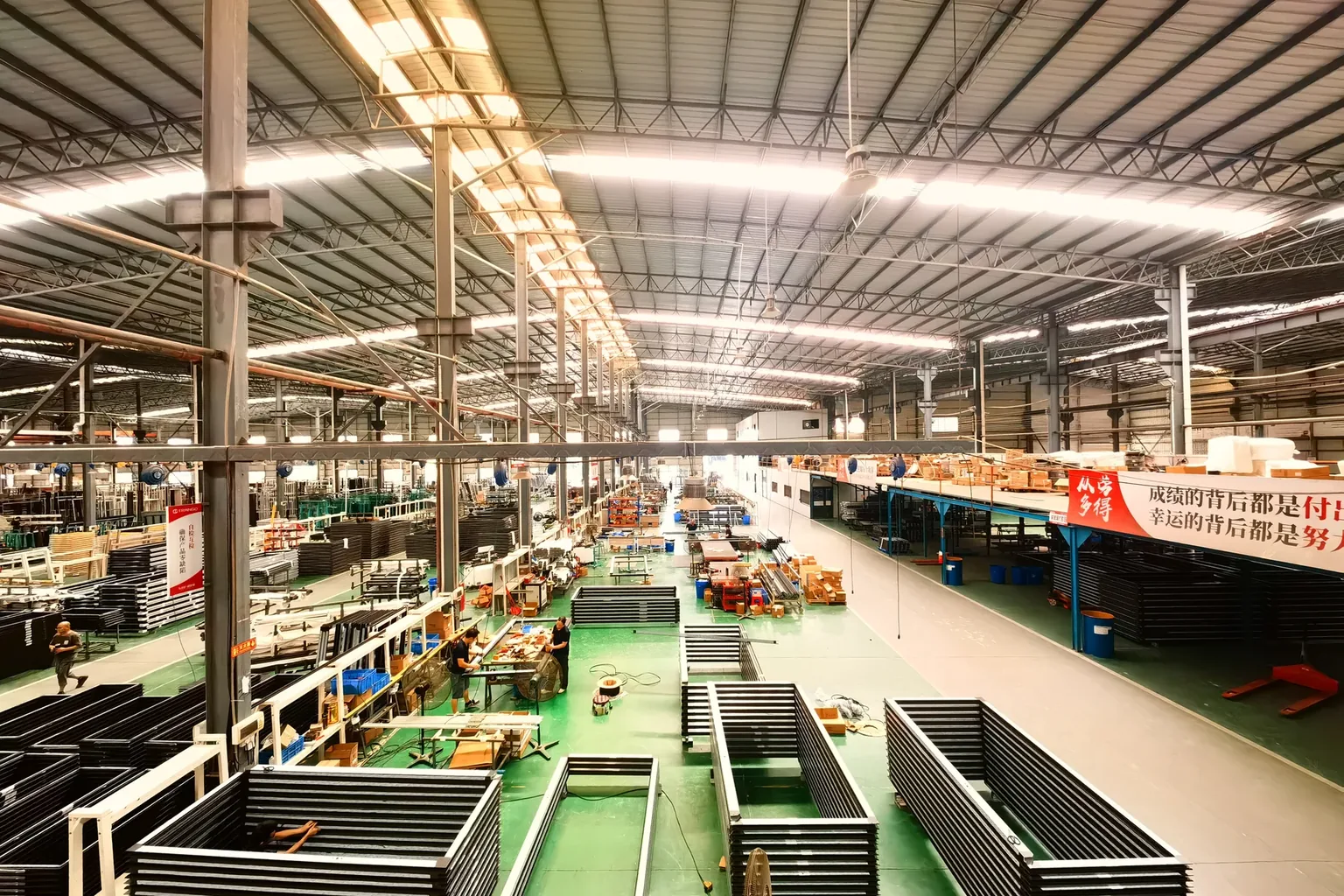
Buying direct from a factory typically offers lower unit prices and more customisation options, but requires more technical dialogue, stronger QC oversight and organised logistics. Buying through a local distributor adds margin but provides local stock, faster response, easier warranty claims and lower language-barrier risk. The right choice depends on your team’s capacity to manage overseas suppliers and the complexity of the systems you are buying.
Price
Unit Cost vs Total Cost
The headline price rarely tells the whole story.
Direct Factory
Lower unit price, more fees to track
- Factory price excludes freight, customs, consolidation and local handling
- Currency, tooling and sample costs are visible and controllable
- Variation orders can arise from unclear specifications
Local Distributor
Higher unit price, fewer surprises
- Margin covers local logistics, stockholding and support
- Pricing is often simpler and faster to obtain
- Hidden costs are lower if the distributor is well organised
Customisation
Standard Products vs Custom Specification
Custom sizes, finishes and hardware are not always available through distribution.
Direct factory advantage
Factories can modify profiles, finishes, glass make-up and hardware to match project drawings.
Distributor constraint
Distributors usually sell standard catalogue items; custom orders may be rejected or heavily marked up.
When distributor wins
For standard, repeat items, a distributor’s stock and local knowledge can be faster and cheaper overall.
When factory wins
For project-specific dimensions, performance grades or finish matching, direct factory engagement is usually necessary.
Support & Risk
Who Handles Problems?
Issues will arise. The question is who is accountable and how fast they can respond.
Local presence
Distributors can visit site, hold stock and replace defective items quickly.
Factory accountability
Direct relationships mean the factory owns the defect, but resolution is slower and distance-based.
Documentation
Factories can provide detailed production records; distributors often aggregate across sources.
Warranty enforcement
Local distributors are easier to pursue for warranty claims because they operate under the same legal system.
Language and time zones
Direct factory communication may require translation and late-night calls; distributors bridge this gap.
Technical depth
Factory engineers know their product deeply; distributor sales teams may need to escalate technical questions.
Decision Framework
When to Choose Which Model
Neither model is universally better.
Choose direct factory when
You need custom specification, your team can manage overseas QC, the order is large enough to justify the overhead, and the system is central to the design.
Choose local distributor when
You need standard products quickly, local support is important, the project is small or remote, and your team lacks bandwidth for overseas supplier management.
Common Mistakes
Common Procurement Model Mistakes
Comparing only unit price
Total landed cost, support and risk-adjusted cost reveal a different winner than the catalogue price.
Assuming factories welcome small orders
Small custom orders may receive less attention than distributor-standard volumes.
Ignoring warranty geography
A factory warranty is only as useful as your ability to enforce it across borders.
Using distributors for heavy customisation
Distributors are optimised for standard stock; pushing them into bespoke work often erodes their advantage.
About the Author
Starveil Solutions Engineering & Technical Team
This guide is written by the technical team responsible for specifying, coordinating and quality-controlling coordinated building-material packages on projects across the United States, Australia, the Middle East, Europe and Southeast Asia. More about our engineering support ›
Published 13 September 2026 · Part of the Comparison Guides series
Deciding Between Factory and Distributor?
We can review your scope and recommend the right procurement model for each system in your project.